Antenor
 Challenge
Moova was weighing an expensive decision: move to a larger warehouse. A bigger facility means the cost of the move itself plus permanently higher rent and operating costs. Before committing that capital, the real question was not “how big should the new warehouse be” but “do we need a new warehouse at all, and if we do, where should it be?”
Neither question yields to a spreadsheet. Warehouse capacity is not a single number; it is the result of feedback between inbound flow, dock availability, handling times and staffing. And the location decision depends on the geography of every shipment the operation actually makes.
Solution
Antenor attacked both questions with the right tool for each.
Capacity dimensioning. A system dynamics simulation of the complete warehouse operation, calibrated against Moova’s real data, made it possible to push simulated volume upward and watch where the operation actually broke. The answer: the current warehouse could still absorb 60% more volume before its constraints forced a move, turning an imminent relocation into a deferred one.
Location optimization. For the eventual move, Antenor analyzed the full history of ~180,000 shipments and solved for the site that minimized total transit time (seller pickup → warehouse → final delivery), so that if and when Moova relocates, the new location is chosen by evidence, not convenience.
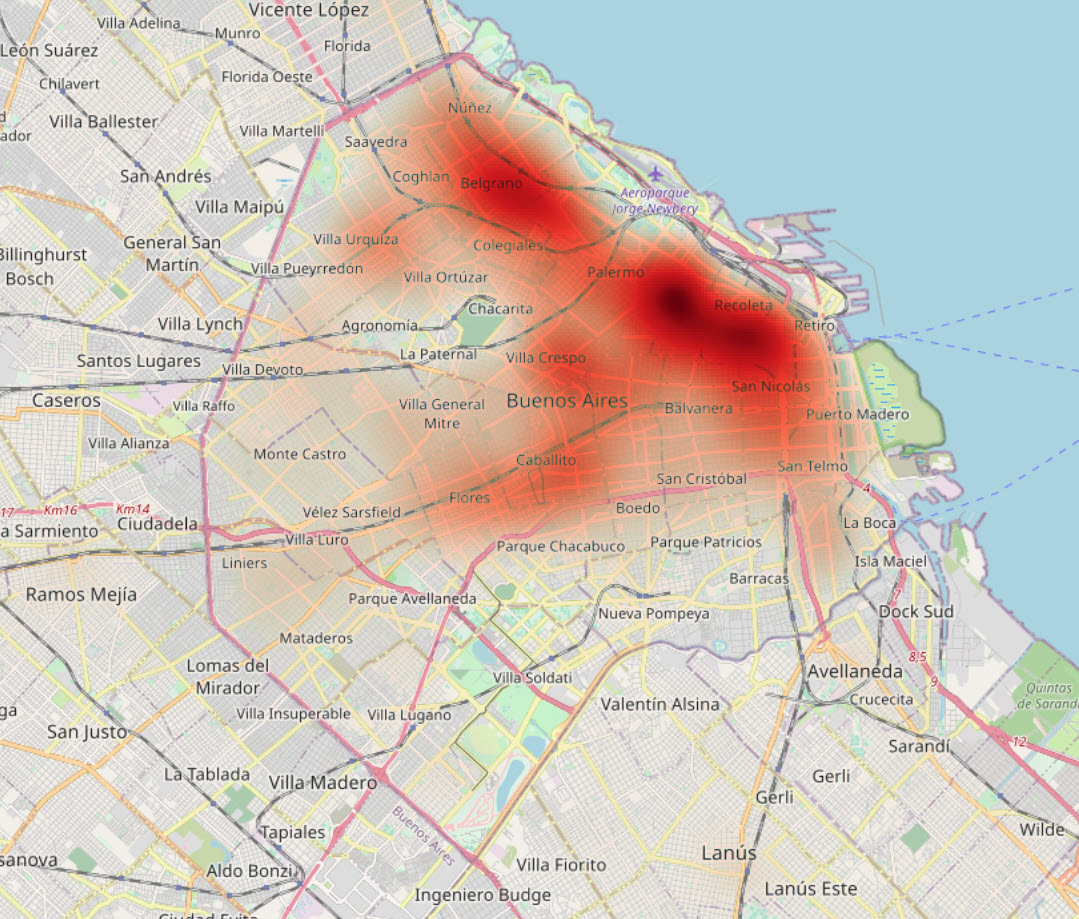
Delivery density across Buenos Aires: every shipment weighted by where it went. The optimal warehouse sits at the center of this mass, not at the center of the map.
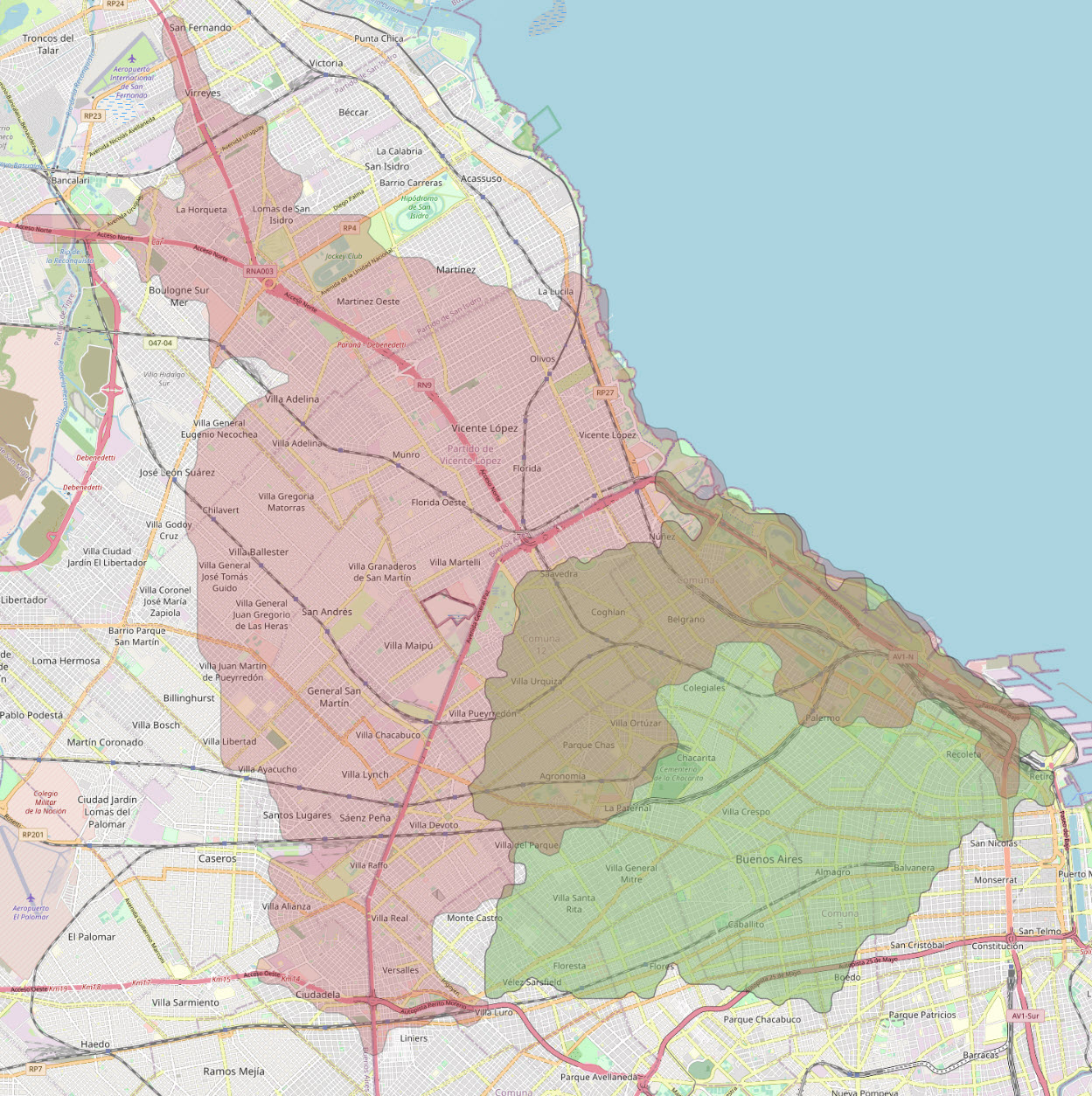
Isochrones from a candidate site: how much of the demand each location can reach within a given drive time. The site was chosen to cover the densest delivery zones in the least time.
Stack
- System dynamics simulation of the full warehouse operation, calibrated on Moova’s operational data
- Capacity stress-testing to find the true growth ceiling of the current site
- Delivery-density heatmaps (QGIS) and travel-time isochrones (Waze) over the full shipment history
- Facility-location optimization (Scipy BFGS) minimizing total transit time across ~180,000 shipments
Results
- The current warehouse can absorb 60% more volume before relocation is justified, deferring a costly move
- The optimal relocation site, minimizing total shipping cost, identified from the full shipment history
- A capital decision made on evidence: neither moving too early nor to the wrong place
- Moova’s operation is independently verifiable at moova.io